There is a general opinion that everyone would benefit from drinking at least 8 glasses of water a day. As there is no real scientific evidence to back this up, it comes down to the person. Your body does require hydrating every day.
However, it should be remembered that there is a certain amount of liquid in the food we eat. Your body will tell you when you are dehydrated enough that you need to drink some water.
How water can help you with weight loss
If you are undergoing a weight loss plan then try and have a big drink of water before your meals as this will help to make you feel full, consequently, you may tend to eat less.
There has long been the belief that coffee and tea will dehydrate you. There is really no concrete evidence to suggest that is accurate.
For a person who consumes a moderate amount of coffee or tea during the day, there is no noticeable evidence that it has a diuretic effect.

Try a squeeze of lemon
Lemon squeezed into a glass of warm water first thing in the morning has no benefit at all. It has been said at times that lemon water will flush the toxins from your body. Well your liver and kidneys do that work on their own. However if you enjoy drinking lemon water, then continue to do so as it won’t harm you.
It must be noted that it is possible to die from drinking too much water. It is a condition called Hyponatraemia. This condition occurs when as much as 6 litres of water is consumed.
It is caused when the sodium levels in the blood to drop to a low level. As you are washing away the natural salts in your body. Symptoms of this condition are similar to being intoxicated with alcohol.
It is very rare for this condition to occur if your kidneys are functioning in the normal manner.
Dehydration and water intake affects urine
The colour of your urine is a quick visual indicator of how hydrated (or dehydrated) your body is.
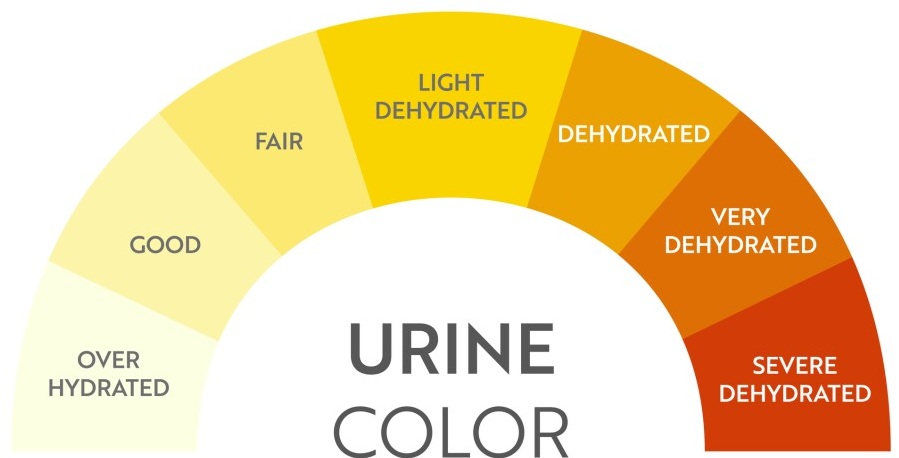
What the chart shows:
-
Pale or very light yellow (“Over hydrated” to “Good”)
→ You’re well hydrated — your body has plenty of water and is flushing waste efficiently. -
Darker yellow (“Fair” to “Light Dehydrated”)
→ You’re mildly dehydrated — your kidneys are conserving water, causing urine to become more concentrated. Time to drink more water. -
Golden to amber (“Dehydrated” to “Very Dehydrated”)
→ You’re significantly dehydrated — not enough fluid intake. This can affect energy, mood, and bodily functions. -
Dark orange to brown (“Severe Dehydrated”)
→ You’re severely dehydrated — this can be dangerous and you should increase your fluid intake immediately. If it stays this colour, medical attention is a good idea.
How dehydration affects urine
When your body doesn’t get enough water:
-
Kidneys try to conserve what’s available.
-
Less water is sent to be expelled — so urine volume goes down and the colour becomes more concentrated (darker).
-
Waste products and electrolytes become more concentrated in urine, which deepens the colour and sometimes causes a stronger smell.
What to do with your water intake
To keep your urine in the “light” range:
-
Sip water steadily throughout the day (don’t wait until you’re thirsty).
-
Aim for roughly 2–3 litres per day (varies with gender, climate, body size and activity).
-
Increase fluids during hot weather, exercise, alcohol/caffeine intake, or illness.
-
Eat high-water foods like fruits and vegetables (e.g., watermelon, cucumber, oranges).
-
Limit dehydrating fluids like excessive coffee, soda or alcohol.
Tip: Aim for urine that is pale straw-yellow — that’s usually a sign you’re drinking the right amount of water.
So stay hydrated but don’t go overboard.